
Water Sort! Color Sort Puzzle
Bobodoo GamePuzzle
4.93.37K Reviews
- Version
- 1.0.68
- Installs
- 10.00M
- Age Rating
- Everyone
Screenshots
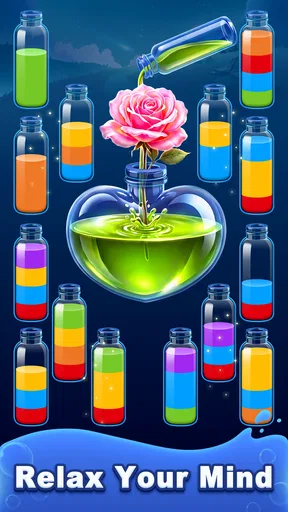

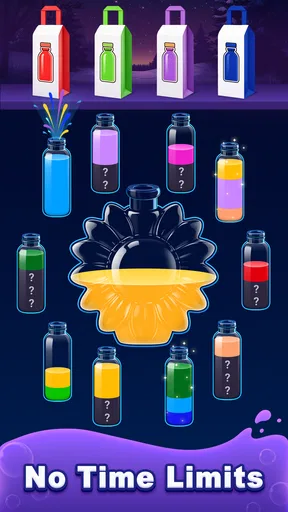
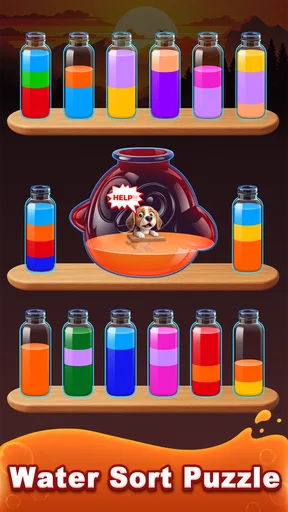

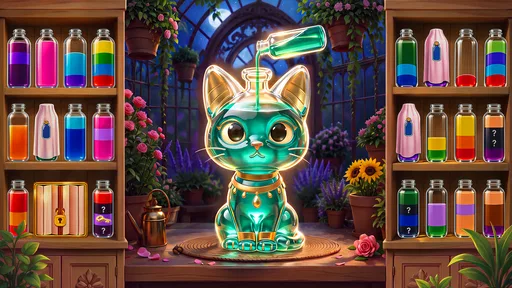


Our Review of Water Sort! Color Sort Puzzle
 Analysis by Appyee
Water Sort! Color Sort Puzzle is the kind of game I open when I want something quiet, simple, and immediately understandable. The idea is familiar: move colored liquid between bottles until matching colors are grouped together. There is no story to follow and no complicated control scheme to learn, so I can begin solving a level within seconds. What makes it worth discussing is not the basic concept alone, but how well this particular version fits short breaks, offline play, and players who enjoy gradually untangling a visual problem.
Developed by Bobodoo Game, this free puzzle game is aimed at everyone and runs on Android devices using version 7.0 or later. It has reached over ten million installs, while its average rating sits at 4.9 from around 402 thousand ratings. Those figures suggest that the format has found a large audience, but they do not replace personal preference: bottle-sorting puzzles can feel wonderfully calming to one player and repetitive to another. My experience is that its strongest appeal comes from the balance between low-pressure controls and the small amount of planning each level demands.
How the Cost Fits the Experience
The game can be downloaded and played for free, which makes the initial decision easy. I do not need to pay before discovering whether sorting colored liquid is enjoyable for me. The current version is 1.0.59, and the game is listed for an Everyone audience, so it is positioned as an accessible casual puzzle rather than a premium title aimed at a narrow group.
There are in-app purchases, with individual items priced from $1.99 to $5.99. That is the main point to consider when judging value. The free entry gives the game its biggest advantage: I can test the core loop during a commute, a waiting period, or a quiet evening without committing money. Paying may make sense for someone who spends a lot of time with it, but the purchase value depends on how much the player dislikes interruptions or wants additional convenience. I would not treat the optional spending as essential to deciding whether the basic puzzle is worthwhile.
The distinction between free access and paid value matters here. The free version is already enough to judge the central activity, because the appeal comes from arranging bottles rather than from a large narrative, a collection of characters, or a multiplayer community. If I enjoy the first sessions, I can continue using it as a lightweight brain exercise. If I find the repeated structure dull, spending more will not change the underlying type of game.
For that reason, I would approach the purchases cautiously. A player who wants a completely fixed-cost experience may prefer a paid puzzle with no optional items, while someone who values immediate access and a no-cost trial will probably see this game as a convenient choice. The verified price range tells me what the items cost, but it does not by itself prove that every purchase is necessary or that it transforms the experience. I would first play for a while, decide whether the routine fits my habits, and only then consider paying.
What I Actually Get for Free
The free experience delivers a focused sorting activity rather than a broad package of unrelated modes. I can pick it up without studying instructions, make a few moves, and put it down again. That makes it useful in situations where a longer game would be inconvenient. I would not need to remember a complicated control layout after a day away, because the action is based on selecting a bottle and choosing where its liquid should go.
The best value comes from the way a tiny number of actions can create a surprisingly demanding problem. A move that looks helpful may consume the only empty space I have available. A color that seems ready to complete may need to be moved temporarily so another stack can be opened. This gives the game more substance than a purely reflex-based time filler, even though the presentation remains uncomplicated.
The real value is the pause between moves, not the speed of tapping. I get the most from it when I treat each level as a small planning exercise. Rushing often creates a messy arrangement, while looking at the available spaces before acting makes the puzzle feel more deliberate. That quality makes it suitable for a short mental reset, especially when I want something interactive but do not want the pressure of a timer or a competitive ranking.
It also works well as a low-commitment alternative to larger puzzle games. Traditional match-three games often emphasize quick reactions, streaks, and repeated effects. Word puzzles depend on vocabulary and concentration in a different way. Physics puzzles may ask me to experiment with movement and timing. Water Sort! Color Sort Puzzle sits somewhere else: its challenge is mainly spatial organization and anticipating consequences. If I like arranging objects into a clean final state, the bottle format is more satisfying than a game built around constant visual noise.
A Practical Way to Play More Carefully
My most useful habit is to protect empty bottles rather than treating them as convenient dumping places. An empty container is a temporary workspace, and once it is filled with the wrong color, several future options can disappear. Before making a move, I look for a color that is blocking a larger stack, then ask whether moving it will expose a useful layer or simply create another problem.
Another helpful approach is to avoid completing a color too early when that completion uses a bottle I may need for rearranging. Finishing a stack feels productive, but the apparently successful move can reduce flexibility. I prefer to keep at least one route open for temporary storage until the surrounding colors are easier to manage. This is a small change in mindset, yet it prevents many situations where the board becomes crowded and every legal move feels unhelpful.
I also recommend scanning the top color of every bottle before touching the screen. The visible arrangement often hides the important decision underneath: which stack can be uncovered with the fewest extra moves? Choosing based only on the easiest immediate match can lead to a longer solution. Choosing based on what reveals the next layer gives me more control and makes the puzzle feel less random.
These habits are not complicated tricks, but they are the reason I find the game more engaging than a simple color-matching toy. The challenge comes from conserving options. When I solve a difficult arrangement without wasting the available space, the satisfaction is closer to completing a small logic problem than to merely clearing a screen.
Where the Relaxing Design Helps
The bottle-and-liquid theme gives the game a clear visual language. I can understand the state of a level at a glance, and the goal is easy to explain to another person. That clarity is valuable when I am tired or distracted. I do not have to read a long tutorial before deciding whether I want to continue.
It is also a good fit for offline moments, matching the game’s positioning as an offline puzzle. I would choose it for a flight, a place with unreliable reception, or a commute where I want a game that does not depend on conversation with other players. Offline suitability is not the same as unlimited variety, though. The benefit is dependable access to the sorting loop, not a guarantee that every session will feel fresh.
A realistic everyday use case is a ten-minute wait before an appointment. I can start a level, think through several moves, and stop when my name is called without losing myself in a complicated story. The same quality works before bed, provided that the player finds visual sorting calming rather than mentally activating. For me, it is most comfortable when I want gentle focus, not when I am looking for excitement.
The game can also suit families because its content rating is Everyone and the rule is easy to demonstrate. A younger player may enjoy the colors and direct manipulation, while an adult can focus on planning. Still, I would not assume that every child will find the puzzle equally easy; the controls are simple, but recognizing when to preserve an empty bottle requires patience. It is better as a shared logic activity than as a game chosen only for bright colors.
The Tradeoffs Behind the Simple Formula
The main limitation is repetition. Once I understand the sorting system, the basic interaction does not change. The interest has to come from the arrangement of colors and the decisions required to solve it. Players who need new mechanics, exploration, characters, or a strong sense of progression may run out of enthusiasm even if the individual levels are well suited to casual play.
There is also a difference between relaxing and effortless. Some arrangements are easy to read, but a crowded board can require several temporary moves and careful memory. That is a positive feature for puzzle fans, yet it means the game is not always a passive way to switch off. If I am already mentally exhausted, I may prefer a simple arcade game or a familiar matching activity instead.
The free price lowers the risk of trying it, but the in-app purchase range creates a value question for long-term players. Someone who wants to avoid all spending should decide in advance not to buy optional items, while someone who dislikes any purchase prompts may prefer a paid alternative with a single upfront cost. I would not call this a flaw in the core puzzle, but it is a genuine part of the ownership decision.
Another tradeoff is that the game’s accessibility comes from its narrow focus. There is no need to learn a complex system, but there is also less room for personal expression or strategic variety than in a larger puzzle collection. I would choose it for a clean, repeatable routine, not as my only game. Keeping that expectation realistic prevents the simplicity from feeling like a missing feature.
Players may also wonder whether it is suitable for very short sessions. In my view, yes, because the central action is easy to resume and a single level can provide a complete moment of play. However, the exact length of a session depends on how carefully I plan and how challenging the arrangement feels. I would not install it expecting every level to take the same amount of time or every break to deliver the same intensity.
Who Will Get the Most Value
I think the strongest audience is anyone who enjoys visual logic without timers, complicated instructions, or a competitive requirement. It is particularly suitable for people who like organizing shelves, arranging colors, or solving small problems through trial and planning. The game rewards patience more than quick fingers, so it can feel comfortable for players who do not normally enjoy action games.
It is also a sensible option for a secondary game on a phone. I can keep it available for moments when I have a few minutes and do not want to begin a large campaign. The free entry makes that role practical: I can see whether it earns a place in my routine before spending anything. Its Android compatibility from version 7.0 onward also makes it accessible across a broad range of devices that are not running the newest operating system.
Someone who wants a calmer alternative to match-three games may appreciate the slower decision-making. Instead of scanning for a fast combination, I am usually thinking about order, storage, and future access. That difference is important. The game is not simply another color-based title; its satisfaction comes from gradually exposing and consolidating layers.
I would suggest skipping it if the main reason to play is social competition, a rich narrative, or constant mechanical novelty. It is also not the best choice for a player who dislikes repeating a single puzzle structure. A paid, story-driven logic game may offer better value for that person, while a word game may be a better fit for someone who wants language practice rather than spatial sorting.
For families, I would frame it as an easy-to-explain puzzle rather than a guaranteed educational tool. It can encourage planning and patience, but I would avoid promising measurable learning outcomes. For adults, its benefit is more straightforward: it provides a compact activity that occupies attention without demanding a long setup.
My Verdict After Weighing the Value
Water Sort! Color Sort Puzzle is worth trying if I want a free, offline-friendly sorting game that turns a very small rule set into a steady stream of planning decisions. Its strongest qualities are immediate accessibility, a clear visual goal, and the ability to fit naturally into short gaps in the day. The high average rating and broad install base show that many players enjoy this formula, although my recommendation still depends on whether repetition feels comforting or limiting to you.
I would begin with the free version and pay attention to how often I return without forcing myself to continue. If I naturally find myself protecting empty bottles, reconsidering moves, and enjoying the clean final arrangement, the game is delivering enough value to justify a regular place on my phone. If I am only tapping through levels out of habit, optional purchases are unlikely to solve the problem.
My final recommendation is therefore positive but specific. Choose it for quiet logic, offline breaks, and short sessions where you want to think without pressure. Skip it in favor of a richer alternative if you need story, multiplayer interaction, or a constantly changing set of mechanics. For the right player, its simplicity is exactly the point; for everyone else, that same simplicity will be the reason it eventually feels too narrow.
Privacy and Permissions
See what permissions an app requests and how it handles your data.
- Wi-Fi connection information
- view Wi-Fi connections
- Other
- view network connections, full network access, control vibration, prevent device from sleeping
Verdict
Strengths of Water Sort! Color Sort Puzzle
- Simple rules make it easy to start playing immediately.
- Bright colors and clean visuals keep the board easy to read.
- Short levels are convenient for quick breaks or casual play.
- Increasing difficulty provides a steady sense of progression.
- Works well for players who enjoy relaxing, logic-based challenges.
Limitations of Water Sort! Color Sort Puzzle
- Later levels can feel repetitive because the core mechanic rarely changes.
- Some puzzles may require trial and error rather than pure logical deduction.
- Mistakes can be frustrating when undo options are limited or restricted.
- Ads may interrupt the experience, especially between completed levels.
- Color-based gameplay may be difficult for players with color-vision deficiencies.
Other Releases by Bobodoo Game
View All
Water Sort: Master Colors
Puzzle4.9
Similar Picks in This Category
View All
Block Blast!
HungryStudio4.8

Braindom: Brain Games Test
Lahana Game Studio4.6

AMAZE!
CrazyLabs LTD4.6

Sudoku - Classic Sudoku Puzzle
Oakever Games4.7

Art Puzzle - Puzzle Games
Easybrain4.8

Amaze GO!
Oakever Games4.9
Frequently Asked Questions
What is Water Sort! Color Sort Puzzle?
Water Sort! Color Sort Puzzle is a casual logic game in which you pour colored liquid between bottles until each bottle contains only one color. The rules are simple, but later levels require careful planning, patience, and several moves ahead. It is designed for short play sessions and does not require fast reflexes, making it suitable for players who enjoy relaxing brain teasers.
How do you play Water Sort! Color Sort Puzzle?
To play, tap a bottle to select it and then tap another bottle to pour the liquid. You can usually pour only onto the same color or into an empty bottle, and the destination must have enough space. The objective is to separate all colors into matching bottles. Successful solutions depend on freeing blocked colors, using empty spaces wisely, and avoiding moves that limit your future options.
Is Water Sort! Color Sort Puzzle free to download and play?
Water Sort! Color Sort Puzzle is generally available as a free download, allowing players to access the core puzzle experience without paying upfront. However, the game may include advertisements, optional purchases, or features connected to premium content, depending on the Android or iOS version. Before installing, check the store listing for current pricing, advertising details, and in-app purchase information.
Does Water Sort! Color Sort Puzzle work offline?
Many of the basic sorting puzzles can typically be played without a continuous internet connection, which makes the game convenient for travel, waiting rooms, or areas with weak reception. Nevertheless, an internet connection may be needed for advertisements, app updates, cloud-related features, or purchases. Availability can vary by version, so test the game offline after installation if this is important to you.
Is Water Sort! Color Sort Puzzle suitable for children and beginners?
The game is easy for beginners to understand because it uses straightforward tap-and-pour controls and a clear objective. It can also encourage logical thinking, planning, and problem-solving. Some advanced levels become considerably more challenging, so younger players may need help or hints. Parents should also review the app’s advertising, privacy information, and any optional purchases before allowing children to play.
Play our best games!


